1. Pain Management
Appropriate strategies and techniques to help manage pain and associated symptoms during the acute, subacute and non-acute stages of an injury. Management is adapted to the individual's presentation and response.

Physiotherapy Clinic
Returning to sport before an injury has sufficiently recovered can increase the risk of re-injury. At Therapy and Rehab, we provide a structured approach to sports injury physiotherapy, combining clinical assessment, individualised treatment and progressive rehabilitation.
Our aim is to help restore the movement, strength, stability, coordination and physical capacity needed for your sporting activities, and to guide your progression towards training and competition.
Book a Specialist Sports Injury Assessment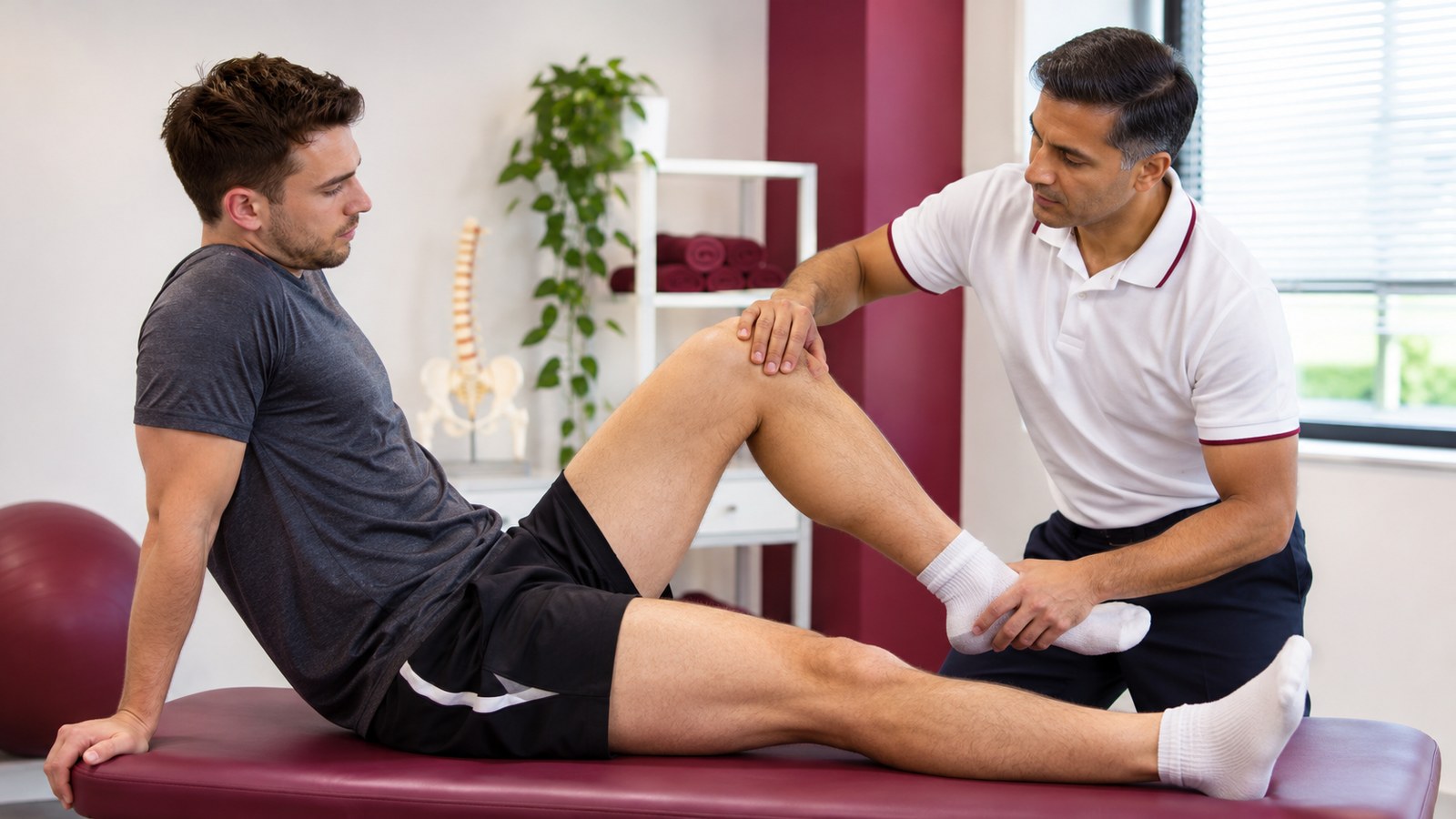
Sports injuries can affect muscles, tendons, ligaments, joints and other soft tissue structures. Problems may occur suddenly during activity or develop gradually through repetitive loading.
Where an injury may involve significant structural damage or requires further investigation, we will advise on appropriate medical assessment, imaging or onward referral. Physical examination does not identify every structural injury on its own.
A useful rehabilitation plan starts with understanding the injury, the structures that may be involved and the demands placed on them by your sport.
We assess sports-related problems affecting muscles, tendons, ligaments, other soft tissues and joints. The assessment may include your injury history, symptoms, relevant clinical tests, joint movement, muscle function, stability, movement patterns and functional ability.
Our aim is to identify the likely source of your symptoms and contributing factors, distinguish between relevant injury presentations and decide whether further investigation or referral is needed. This helps guide an appropriate treatment and rehabilitation plan.
Treatment is selected according to the nature and stage of the injury, the clinical findings and the physical demands of your sport. It may include the following approaches, where clinically appropriate.
Appropriate strategies and techniques to help manage pain and associated symptoms during the acute, subacute and non-acute stages of an injury. Management is adapted to the individual's presentation and response.
Hands-on treatment and therapeutic interventions may include stretching, joint mobilisation, manipulation where appropriate, and Proprioceptive Neuromuscular Facilitation (PNF) techniques. These may be used to address movement restrictions, manage swelling (effusion) and support the restoration of joint movement and stability.
Because injury can affect proprioception — the body's sense of joint position and movement — rehabilitation may include specific work on joint awareness, balance and neuromuscular control.
Targeted exercise programmes help rebuild muscle and tendon strength, endurance and load tolerance. Where appropriate, soft tissue techniques such as deep tissue massage may be used alongside exercise to address local tissue restriction and impaired soft tissue mobility.
We address relevant joint stiffness, muscle tightness and movement restrictions through appropriate treatment and exercise, with the aim of improving mobility, range of movement and flexibility.
Progressive strengthening and conditioning rebuild the physical capacity needed for the individual's sport. Exercise is tailored to the injury, current ability and sporting demands.
Rehabilitation progresses towards the movements and demands of sport. Depending on the activity, this may include balance, coordination, acceleration, deceleration, jumping, landing, agility and changes of direction.
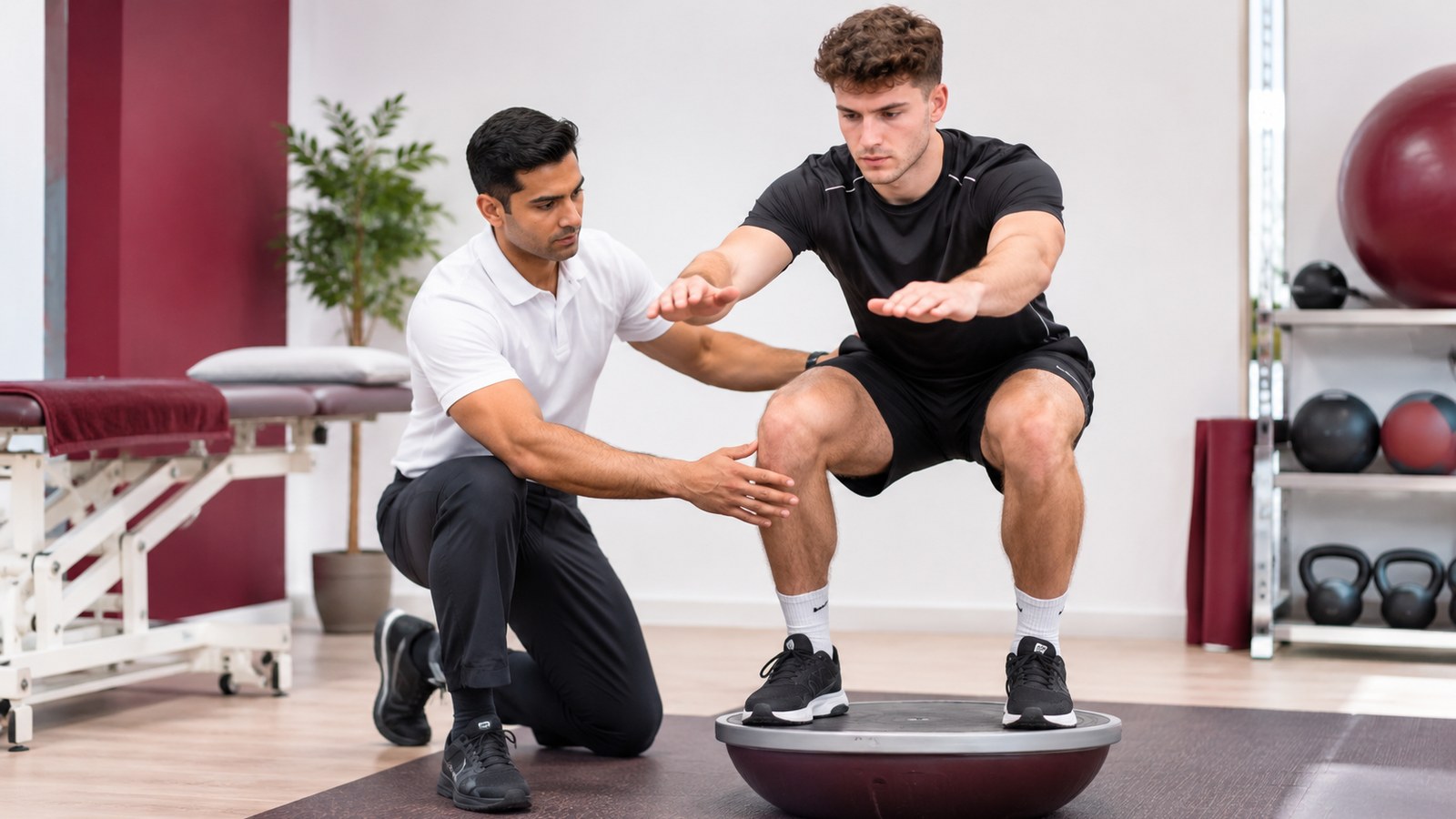
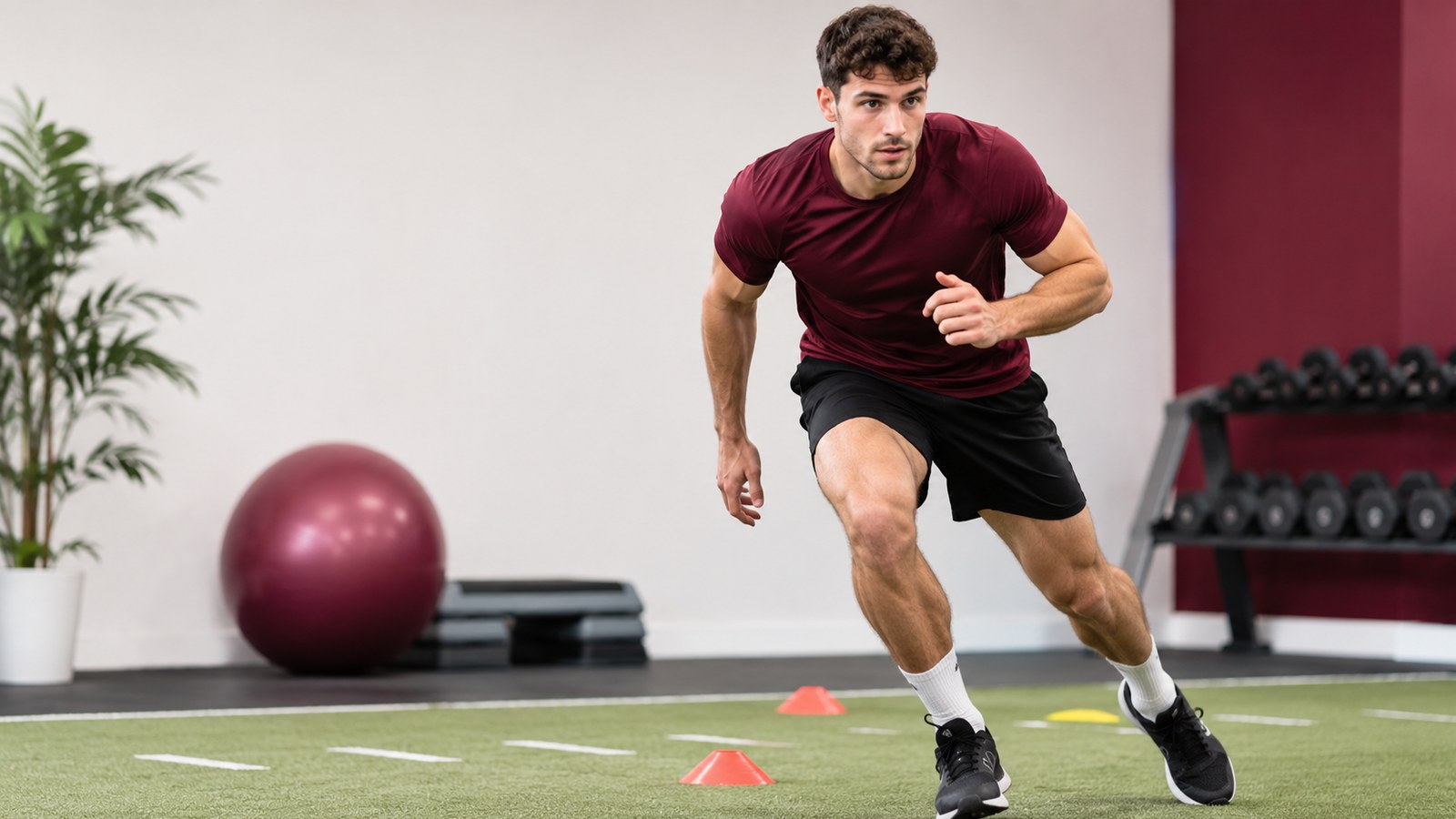
Return to sport is a progressive process, not simply a decision based on whether pain has disappeared. Progression should reflect the injury, clinical findings and the athlete's ability to manage the demands of their sport.
No assessment can guarantee that re-injury will not occur. Return-to-sport decisions should be individualised and based on the injury, clinical findings and relevant functional criteria.
After an injury, continued physical preparation can help maintain rehabilitation progress and address relevant factors that may affect sporting performance.
These measures cannot remove all injury risk, but they can help address modifiable factors and support ongoing physical readiness.
Consider an assessment if you have pain, swelling, restricted movement, weakness or difficulty taking part in your sport after an injury. Seek urgent medical assessment if you suspect a fracture, dislocation or another serious injury.
This depends on the nature and severity of the injury. Training through pain may aggravate symptoms or delay recovery. An assessment can help guide appropriate activity modification and rehabilitation.
Sports injury physiotherapy can be tailored to the individual's activity level, injury and sporting goals, from recreational activity to competitive sport.
Recovery time varies with the type and severity of injury, the structures involved, individual factors and the demands of the sport. Your rehabilitation plan is progressed according to clinical findings and your response.
Return-to-sport decisions consider the injury, clinical findings, movement, strength, stability, coordination, functional performance and ability to tolerate sport-specific activity. Progression should be individualised rather than based on pain alone.
Physiotherapy can help identify relevant physical limitations and contributing factors. Individualised strength, conditioning, mobility and sport-specific programmes can address these factors and support ongoing physical preparation.
Arrange a specialist sports injury assessment and start planning your rehabilitation.
Book a Specialist Sports Injury AssessmentHave a question? Contact our team and we will get back to you.
Your details remain confidential. We aim to respond within one working day.